



Types of Kitchen Layouts – Choosing the Best Design for Your Space
The kitchen is often called the heart of the home, and for good reason. It’s where meals are prepared, conversations are shared, and family life unfolds. Whether you’re building a new home or renovating an existing one, choosing the right kitchen layout is one of the most important design decisions you’ll make.
A well-planned layout doesn’t just look good; it enhances workflow, maximises space, and supports your lifestyle.
In this guide, we’ll explore the most popular kitchen layouts, along with tips to help you choose the right one for your space, needs, and budget.
What to Consider When Choosing a Kitchen Layout
Before jumping into specific layouts, it’s important to evaluate your space and lifestyle. The ideal kitchen layout should support the way you cook, live, and interact with your home. Here are key factors to consider:
- Size and shape of the kitchen – Is your kitchen wide, narrow, open-plan, or compact?
- Cooking habits – Do you cook solo, with a partner, or for a large family?
- Storage needs – Do you need lots of cabinetry, pantry space, or open shelving?
- Entertaining – Will your kitchen be a social space for guests?
- Natural light – Consider windows, views, and ventilation
- Budget – Some layouts (like island kitchens) require more space and cost to install
The Kitchen Work Triangle Concept
A timeless principle in kitchen design is the “work triangle”, which connects the sink, stove, and refrigerator in a triangle-shaped flow. This concept ensures efficiency by reducing the steps between these key stations.
While modern kitchens often have more appliances and zones (prep, cooking, cleaning, storage), the triangle still serves as a useful reference. An effective layout minimises traffic through the triangle and keeps work zones compact but comfortable.
Main Types of Kitchen Layouts
Let’s take a closer look at the most common kitchen layouts, along with their pros, cons, and best-use scenarios:
Single-Wall Kitchen
In a single-wall layout, all cabinets, appliances, and workspaces are positioned along one wall. It’s commonly used in small apartments or minimalist homes.
Best for: Studios, flats, narrow or compact spaces.
Pros:
- Simple and affordable to install
- Great for open-plan living
- Minimal footprint
Cons:
- Limited storage and counter space
- Work triangle is linear, which can be less efficient
Tip: Pair it with a kitchen island or movable prep cart to increase functionality.
Galley Kitchen
Also known as a corridor kitchen, this layout features two parallel counters with a walkway in between. It’s highly efficient for cooking and allows for good separation of cooking and cleaning zones.
Best for: Small to medium homes, especially narrow kitchens.
Pros:
- Excellent workflow for serious cooks
- Easy to separate functions (one side for cooking, one for prep or washing)
- Makes the most of limited space
Cons:
- Can feel tight with multiple people
- Less suited for entertaining unless part of an open plan
Tip: Use light colours and open shelving to prevent a claustrophobic feel.
L-Shaped Kitchen
This classic layout places appliances and counters on two adjoining walls, forming an “L” shape.
Best for: Open-plan homes, corner kitchens, medium-sized spaces.
Pros:
- Great for combining with a dining or living area
- Offers good storage and prep space
- Allows for easy traffic flow
Cons:
- Corner cabinets may need special storage solutions
- Not always suitable for larger families or multiple cooks
Tip: Add a breakfast nook or small island for more seating and surface area.
U-Shaped Kitchen
With cabinetry on three walls, this layout forms a U and offers maximum storage and counter space.
Best for: Larger kitchens, households that cook frequently.
Pros:
- Plenty of room for cooking, prep, and storage
- Efficient work triangle
- Can incorporate multiple zones for multitasking
Cons:
- Requires a wider room
- Can feel enclosed without natural light or an open end
Tip: Leave one wall open to create a more open-plan feel, or integrate a peninsula.
Peninsula Kitchen
This layout is similar to the U-shape but features a peninsula—a counter that juts out like an island but is attached to a wall or cabinet run.
Best for: Semi-open kitchens, smaller homes, or remodels where an island isn’t feasible.
Pros:
- Adds extra seating, prep, or serving space
- Helps define zones in an open plan
- More space-efficient than a full island
Cons:
- Can disrupt traffic flow if too narrow
- Less flexibility than a standalone island
Tip: Use pendant lights over the peninsula for added ambience and task lighting.
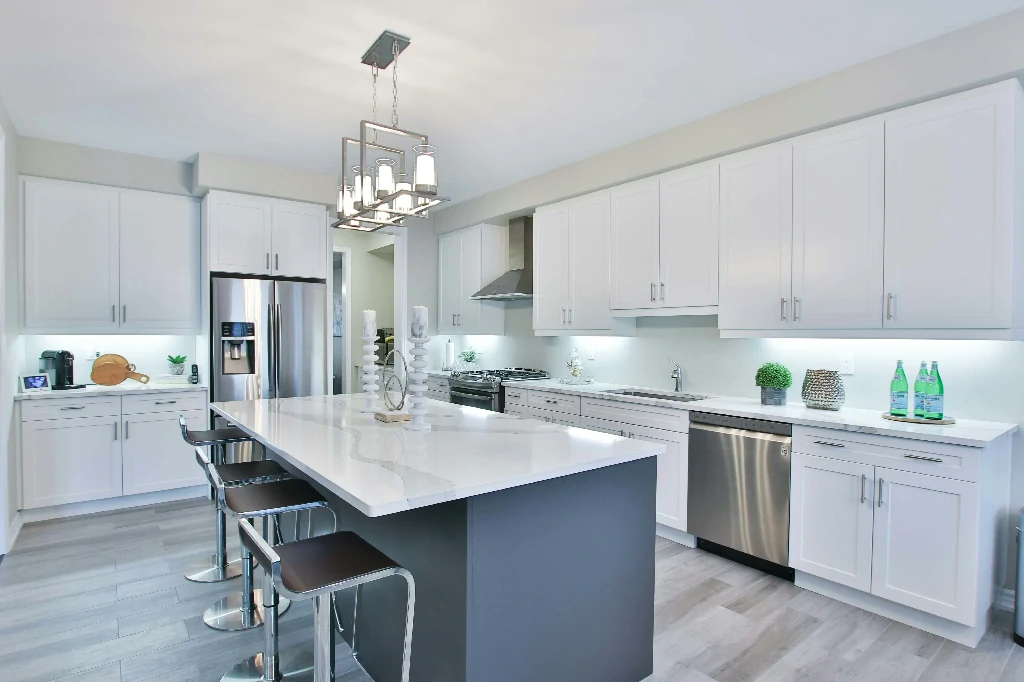
Island Kitchen
A popular modern layout, this design includes a central island surrounded by work zones.
Best for: Large open-plan homes, entertainers, and families.
Pros:
- Adds workspace, storage, and seating
- Encourages social interaction during cooking
- Perfect for open plan living
Cons:
- Requires significant floor space
- More expensive to install (plumbing, electrics)
Tip: Use the island for specific zones—like prep, serving, or even a sink or hob—to optimise your work triangle.
Two-Island or Double-Island Kitchen
Used in luxury homes or very large kitchens, this layout includes two islands—one for cooking/prep and one for entertaining or dining.
Best for: Spacious kitchens, professional-grade homes, multi-cook families.
Pros:
- Premium feel with dedicated zones
- Maximises functionality and style
- Great for hosting and entertaining
Cons:
- Requires a lot of space and budget
- May not be practical in urban homes
Modern Variations and Hybrid Layouts
Kitchens are becoming more flexible, and so are layouts. Many homeowners now opt for hybrid layouts that suit their lifestyles:
- Open plan kitchens with dining and lounge integration
- Island + L-shape combos for increased prep space
- Hidden sculleries or walk-in pantries to separate mess from main areas
- Modular kitchen designs for adaptability and easy upgrades
These modern variations can be tailored to your home’s layout and daily needs.
How to Choose the Right Layout for Your Needs
Choosing the right kitchen layout is about more than looks. Consider:
- Your lifestyle – Do you cook daily, entertain often, or prefer takeout?
- Your household size – Bigger families may need more prep zones and storage
- Your home’s structure – Existing plumbing, walls, and windows may limit options
- Future-proofing – Plan for how your needs may evolve in the coming years
- Budget – Some layouts are more cost-effective to implement
Consulting a professional can help you weigh these factors and customise the right design.
Design Tips for Any Layout
Regardless of your kitchen shape, keep these tips in mind for a functional and beautiful space:
- Maximise vertical space with tall cabinets and open shelves
- Ensure clear walkways – aim for at least 900mm between units
- Layer your lighting – mix ambient, task, and accent lighting for mood and function
- Use light-reflecting surfaces to enhance natural light
- Add smart storage – use drawers, pull-outs, and corner units to minimise clutter
These design tricks can elevate even the smallest kitchens into stylish, high-performance spaces.
FAQs
Can I change the kitchen layout of my existing home?
Yes, but it may require moving plumbing or electrical connections. A professional assessment is essential.
Which kitchen layout is best for resale value?
Open-plan kitchens with islands or L/U-shapes are often most appealing to buyers.
What’s the most budget-friendly kitchen layout?
Single-wall and galley kitchens are usually the most cost-effective due to simpler cabinetry and fewer connections.
Are islands possible in small kitchens?
Yes, with careful planning. Consider mobile islands or narrow prep tables to maximise flexibility.
Choosing the right kitchen layout is key to creating a space that works for your lifestyle and complements your home’s design. Whether you’re building from scratch or renovating an existing kitchen, each layout has unique benefits that can be tailored to your needs. From compact galley kitchens to spacious island configurations, the possibilities are endless.
Need help designing your dream kitchen? Contact Standish for expert kitchen planning, space optimisation, and design solutions that fit your budget and vision.
Photo by Lotus Design N Print on Unsplash
